Q: Hey! Do you remember where you were or what was going on when this song first started coming together?
A: The idea for the song first surfaced during the first Trump administration, when it became increasingly clear that we were a deeply divided nation drifting further to the right—hence the line “the nation ran red.” I was feeling unsettled by what I saw as growing injustice and a loss of empathy in our public discourse. I had the basic framework of the song but knew it needed another voice, so I reached out to my brother Steve, who’s also a songwriter and very much on the same wavelength. We collaborated remotely, passing ideas back and forth, and the song really took shape from there. I couldn’t be happier with how it came together—it felt honest, purposeful, and grounded in shared values.
Q: That title really grabs you right away. When did you know “That’s No Way To Treat A Lady” was the right way to frame the song?
A: I’m often title-first when I write, and this phrase had been rattling around in my head for a long time—usually in the context of a man disrespecting a woman. As the song developed, it suddenly clicked that Lady Liberty is the symbolic face of our democracy. That realization reframed everything. It felt like a powerful and natural way to express the idea that, as a nation, we were disrespecting the very principles we claim to stand for. Once that connection was made, the title felt inevitable.
Q: Writing about the state of the country can get heavy fast. How did you decide how far to push the message without losing the heart of the song?
A: That balance was really important to me. I wanted to acknowledge what I see as a cult of personality pulling us away from values that have traditionally made this country stronger—empathy, inclusion, and respect for one another. At the same time, I didn’t want the song to turn into a rant. We’re surrounded by noise and outrage every day, from all sides. My goal was to create something reflective and emotionally grounded—something that invites people in rather than shuts them out.
Q: You chose to make Lady Liberty a character here. What made that approach feel right for what you wanted to say?
A: Using Lady Liberty allowed me to frame the song around something larger than politics—it became about shared ideals. She represents who we believe ourselves to be as a nation, or at least who we aspire to be. By giving her an emotional presence in the song, I hoped to turn abstract problems into something more human and personal. It creates an emotional call to action without pointing fingers.
Q: The song feels very rooted and stripped back. Was that the sound you heard in your head from the start, or did it reveal itself as you worked on it?
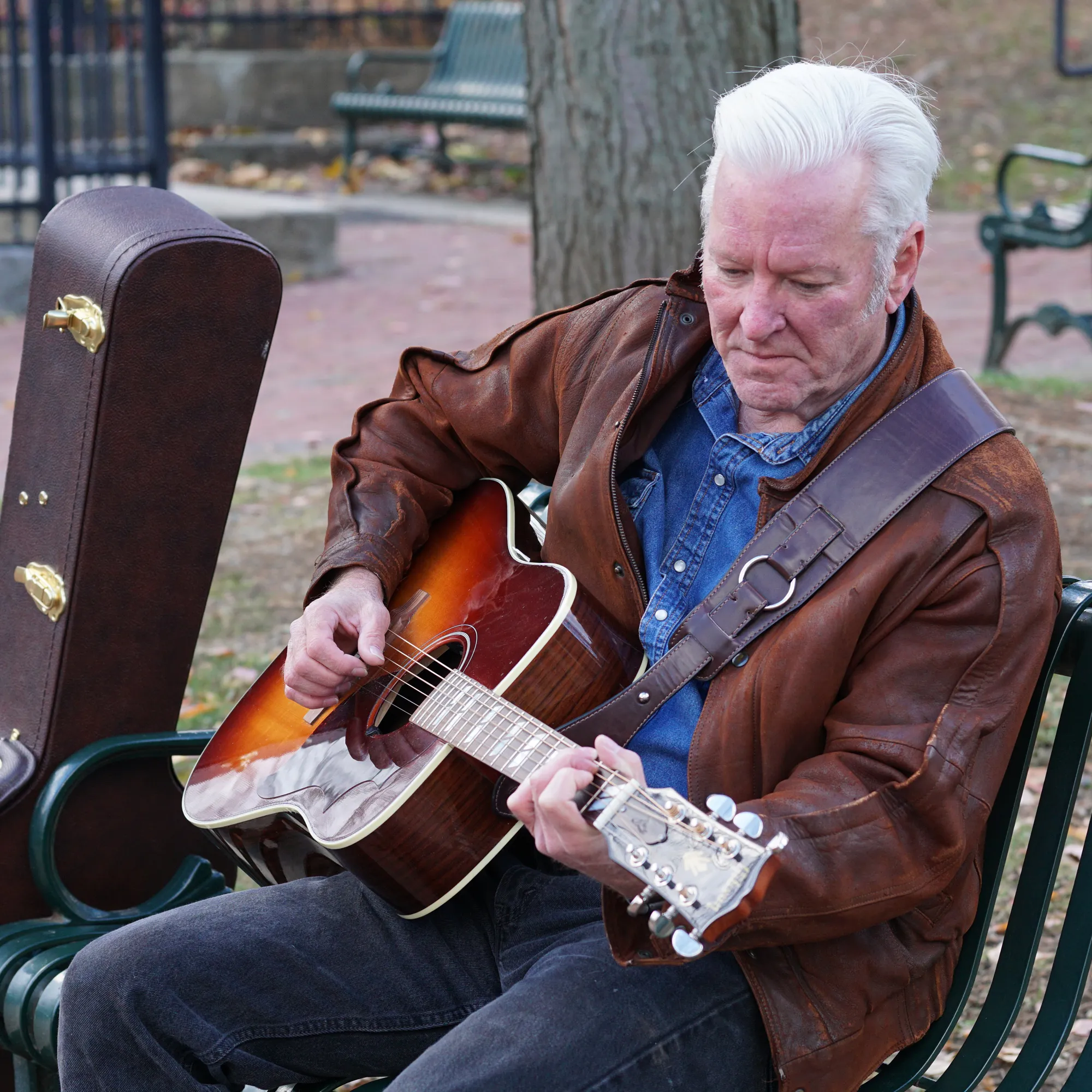
A: Most of my songs start life on an acoustic guitar. I’ve always felt that if I can’t stand in front of people and play a song with just a guitar, then I probably haven’t finished the writing yet. So yes, this one was always meant to feel stripped back and grounded. That said, I was fortunate to work with producer EJ Ouellette, who has a great ear for knowing when to add and when to step back. His instrumentation really rounded out the track without ever overpowering the song’s core.
Q: Is there a specific line in the song that still hits you when you play it or hear it back?
A: “So I looked to Lady Liberty to find some comfort in these times / Said a prayer and by God I swear I saw a tear fall from her eye.” That lyric really crystallizes the emotional center of the song for me. It was one of the lines my brother contributed, and I think it’s the moment where the song fully reveals what it’s trying to say.
Q: Folk music has always been tied to storytelling and social commentary. Do you feel connected to that lineage when you write songs like this?
A:Very much so. I’ve always been drawn to artists who weren’t afraid to speak truth to power—people like Bob Dylan, Woody Guthrie, and Pete Seeger. At the same time, I think the spirit of folk music goes far beyond the traditional genre boundaries. Songs like Get Up Stand Up, Fight the Power, or What’s Going On may not be labeled as folk, but they absolutely carry the folk ethos—using music to reflect society and push conversations forward.
Q: Now that the song is out, what kind of reactions have stood out to you the most?
A: One response really stuck with me. Someone wrote that the song didn’t feel like it was written to score points or grab attention, but rather to open a conversation and remind people to slow down and reflect on what truly matters. That’s exactly why I write songs like this. If it gets people listening, thinking, and talking—even quietly—then it’s done its job.
Q: What do you hope someone feels or thinks about after sitting with this song for a few minutes?
A: I hope listeners come away with a renewed sense that our democracy is fragile and worth protecting. The divide between those who have and those who don’t continues to grow, and that has real human consequences. More than anything, I hope it encourages people to stand up—however they can—and look out for their neighbors. Small actions matter, and we owe it to one another to stay engaged and compassionate.
Q: As a songwriter, do songs with this kind of subject matter take something different out of you compared to more personal or lighter tracks?
A: The short answer is yes. Every song requires a certain level of emotional investment, whether it’s about love, loss, or uncertainty. Interestingly, songs about social issues can sometimes feel clearer to write because my own sense of right and wrong is fairly solid. More personal songs tend to live in emotional gray areas, and navigating those honestly can be more challenging—but also incredibly rewarding.
Q: Does this single point toward a bigger project you are working on, or are you taking things one release at a time right now?
A: That’s No Way To Treat A Lady will appear on my upcoming EP, Carrownisky Strand. The record will feature four additional original songs along with a cover of “What’s So Funny About Peace, Love and Understanding” by Nick Lowe, which fits beautifully with the themes explored in this song.
Q: Looking ahead to the rest of the new year, what is next for you musically and creatively?
A: I’m genuinely excited about what’s ahead. Once the EP is released, I’ll be touring throughout New England in support of it, and I’ll also be showcasing at the Cape May Singer-Songwriter Conference in the spring.
Beyond that, I’m continuing to write and record new material. There’s more music coming, and I’m looking forward to seeing where these songs—and these conversations—lead next.

Listening to songs so you don’t have to! Just kidding :D, you totally should. Music blogger by day, nurse by night