Nancy Sheppard
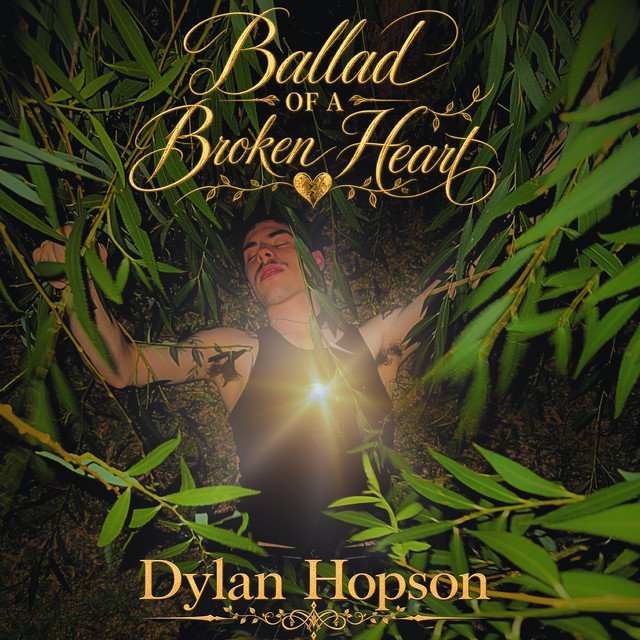
Hi! Dylan, thanks for kicking back with us today! Before we dive into the track, take us into your space—when you’re sitting down to create something as heavy as ‘Ballad Of a Broken Heart,’ what does your room look like? Are you writing in the middle of the night, coffee in hand, or just grabbing a guitar whenever inspiration hits?
A: Most of the time, inspiration hits me at random points during the day. I’ll hear a phrase, feel something, or get an idea, and I’ll quickly write it down—usually on a napkin or sticky note—and keep it in my pocket until I can come back to it.From there, I sit with the concept and figure out what I really want the song to say and what I want it to mean. My songs are rarely written in order. I usually collect different lyrics, images, and feelings that I know belong in the song, then slowly piece them together like a puzzle until the story feels cohesive. For a song as emotional as “Ballad Of a Broken Heart,” it was important to make sure every part of it helped tell the same story and carried the feeling behind it.
Word is that a lot of your lyrics start out as letters you never actually sent. Did ‘Ballad Of a Broken Heart’ start off as a literal draft in your notes app or a piece of paper, and at what point did you realize, ‘Okay, this isn’t a letter anymore, this is a song’?
A: Yes, as strange as it may seem. I’m big on writing letters. Every song I write is addressed to a specific person, with this song specifically, I was playing around on my piano looking at the written draft of the first chorus just playing what my heart told me. I have the voice memo on my phone and it’s slightly different than the finished product. From the pacing, to the cadence of the voice memo, it seems more intimate and raw. I love going back and listening to it because it really shows how much I’ve grown and healed since the writing stage of this song.
The core of this song wrestles with that raw question of whether someone loved you for who you are or just wanted you physically. That’s a really vulnerable thought to put out into the world. Did you hesitate at all before putting that line into the microphone, or was it just therapeutic to say out loud?
A: It was definitely difficult to be that raw and honest. When you sing about something that personal, you are not only sharing it with other people—you also have to fully admit it to yourself. That can be a hard mindset to sit with, and an even harder lesson to learn.But it was also very cathartic. Putting those feelings into the song helped me get them out of my head and face the truth of the situation instead of avoiding it. Saying it out loud was vulnerable, but it gave me a sense of release and allowed me to start healing from it.
You write, record, mix, and master everything yourself from top to bottom. When you’re sitting alone in your room wearing all those different hats, how do you know when a track is actually finished—or do you just have to force yourself to step away from the computer?
A: Even though I handle the writing, recording, mixing, and mastering myself, I am lucky to have friends and family who help me stay grounded throughout the process. I bring them along on the journey by playing them different versions and even the smallest changes, because fresh ears can catch things I might have listened past after hearing a track a hundred times.That said, there is always a point where I have to tell myself to step away from the computer. I am honestly never completely satisfied—I can always hear another lyric I could refine, a background vocal I could add, or a small production detail I could adjust. But eventually, you have to recognize when the song says what it needs to say and let it exist as it is.
A lot of modern music gets polished until every tiny flaw is auto-tuned or edited out, but you left the natural vocal cracks and audible breaths in this track. What made you make that creative choice to keep the raw human moments instead of slicking it up?
A: I love the idea of a song being able to genuinely move someone. I also come from a theater background, so I have always believed that the small imperfections are often what make a performance feel real. A crack in someone’s voice, a breath between lines, or a moment where the emotion is almost too much can say more than something technically perfect.For me, overly polished music can sometimes feel lifeless—like the humanity has been edited out of it. I wanted this track to feel personal and alive, not like a machine was singing it. Keeping those raw moments added to the emotional depth of the song and made the story feel more honest.
Because this track comes from such a personal place, how did you feel right after you hit export on the final master? Did you feel a sense of relief, or was it nerve-wracking knowing people were about to hear your inner monologue?
A: When I was getting ready to release this song, I felt more excited than nervous. By the time I hit export on the final master, I felt like I had grown alongside it. The process of writing and recording it gave me time to sit with those emotions, understand them, and eventually let them go.Songwriting has always been very therapeutic for me. It gives me a space to write and sing about things people do not always feel comfortable talking about openly. I like to say that my music is like a therapy session—not just for me, but hopefully for anyone listening who may be carrying some of those same feelings.
Heartbreak can make people feel completely isolated, but songs like this act as a mirror. Have you had any fans reach out over DMs or comments sharing how ‘Ballad Of a Broken Heart’ hit home for them in a way they didn’t expect?
A: My fanbase is still relatively small, so I do not get a huge number of DMs about my music yet. But I have had people from my TikTok community reach out and tell me how much they appreciate the raw, honest nature of what I create. Those messages mean a lot to me, because they remind me that even a song written from one very personal experience can connect with someone else in an unexpected way.One of my favorite messages said, “This song made me think about some hard things. It made me sad for my younger self—and I’m happily married.” I thought that was both funny and really meaningful. It showed me that heartbreak songs are not always just about someone’s current situation; sometimes they bring up memories, old wounds, or a version of yourself you have already grown past.
Looking at your discography, you’ve done some revamped versions of earlier tracks alongside fresh releases. When you look back at your earlier work compared to ‘Ballad Of a Broken Heart,’ how do you feel your writing and mixing style has evolved?
A: When I go back and listen to some of my earliest songs, I feel a little bittersweet. I can hear imperfections I did not notice at the time—whether it is in the writing, the vocal delivery, or the overall production quality. But I also try to give myself grace, because those songs reflect where I was creatively and emotionally at that point in my life.Comparing them to my more recent releases, especially “Ballad Of a Broken Heart,” it is really satisfying to hear the progress I have made. I have become more intentional with my songwriting, more confident in my vocal choices, and more aware of the small mixing details that help a track feel full without losing its emotion. Revisiting older work reminds me that growth is not always obvious while you are in the middle of it—but looking back, it makes me proud of how far I have come, and where I’m going.
One thing about this single is that it doesn’t give a nice, neat, happy resolution at the end—it leaves the confusion and raw feelings out in the open. Do you think we place too much pressure on music to give us ‘closure’ when real life rarely works that way?
A: I think music can be a stepping stone toward healing, but it should never be expected to carry someone all the way there. One thing I have had to learn is that there is no single song—or any magical answer—that can completely heal you. Healing is a personal process, and sometimes it takes a long time. What helps one person may not work the same way for someone else.I do think we sometimes put pressure on music to give us a neat resolution because that is what we want in real life. But not every story ends with closure, and not every feeling has a clear answer. Sometimes the most honest thing a song can do is leave those emotions out in the open.
What brings me joy is knowing that my music and my story might help someone feel a little less alone in those difficult moments. If a song can give someone a place to sit with their feelings and become a small step toward healing, then that’s when I know I’ve done my job.
You’ve worked on collaborative tracks before, but this one is completely solo. Do you find it easier to dig into the really personal stuff when it’s just you alone in the room, or do you ever miss having another voice in the studio to bounce ideas off of?
A:There is something really intimate about working on a solo track. It gives me more room to breathe and explore the emotions without feeling like I need to explain every thought before I follow it. When a song is deeply personal, being alone in the room can make it easier to sit with those feelings and let the story unfold naturally.At the same time, collaboration brings a completely new perspective. Having another person in the studio can lead to ideas, melodies, or emotional interpretations that I may not have found on my own. Both experiences have their strengths, and they will always hold a special place in my heart.
I do not think one is necessarily easier than the other. The real challenge is not how many people are singing on a song or how it is performed—it is figuring out how to tell the story honestly and communicate the message in a way that feels true.
If you could prescribe the absolute perfect environment for someone listening to ‘Ballad Of a Broken Heart’ for the very first time, where are they and what are they doing?
A: I’ve always loved listening to this song in the car, driving at night. There’s just this ethereal effect that it has on the music, that makes you feel like you’re in a movie. After the sun goes down, there is a kind of peace and stillness that lets you really sit with the music. It feels like you are in your own little world, able to hear the lyrics differently and connect with the emotion in a deeper way. For a first listen, I think a late-night drive—or even just sitting somewhere quiet with headphones on—would be the perfect setting.
To wrap things up, now that ‘Ballad Of a Broken Heart’ is out in the world, what’s next on the horizon for you for the rest of this year? Are we looking at more singles, an EP, or maybe taking these songs to a live setting?
A: As of right now, I’m working on my biggest project that will wrap up this Letter Era. Offering the rest of the story, and the last bit of healing I’ve had to do. I’m refraining from sharing the name of this new album, but its something that people should be exited for. Cause i know i am. “Ballad Of a Broken Heart” was originally supposed to go on this new project exclusively, but my friends and family bullied me into releasing it as a single, So there may be more singles that come out before this next album. You’ll just have to stay tuned and find out.