Jessica Neal
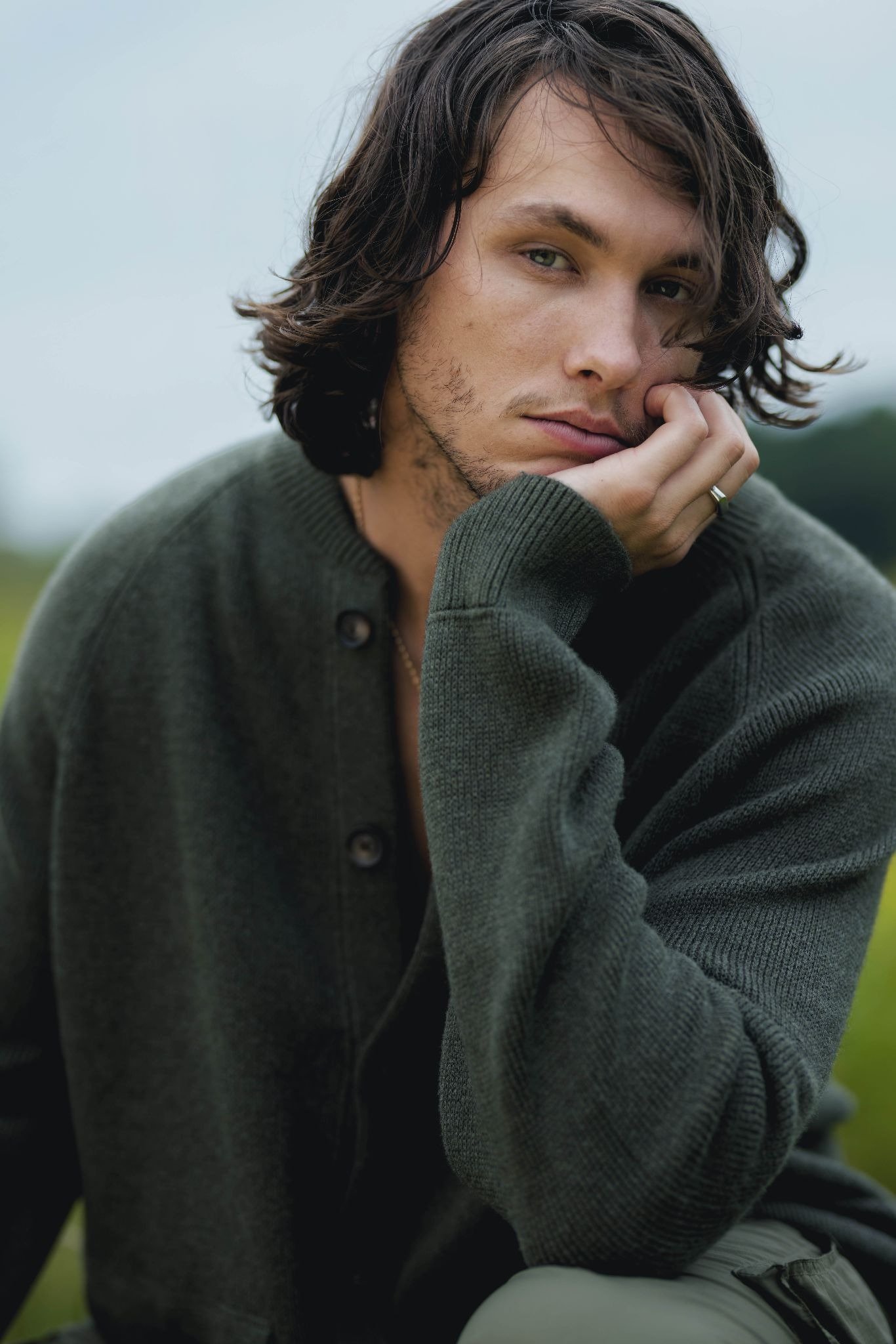
Hi! For people who are just getting to know you as an artist, how would you describe your sound and personality through your music? Is it pretty close to who you are in everyday life, or do you show a different side of yourself when you write songs?
A: I would say my songwriting shows a different perspective from my everyday life. Day to day, I am a pretty carefree, happy guy, but I tend to lean into melancholy themes when I write. I explore heartbreak, loss, grief – things I’m trying to understand more for my own personal growth. When I’m able to exist in an emotion for a period of time, it reveals more about who I am and “why” I am.
You’ve spent a lot of time working behind the scenes with other artists. What do you think that experience has taught you about songwriting, and has it changed the way you approach your own music?
A: Taking myself out of the driver’s seat in the creative process allows me to see things from a different perspective. I can be much more objective, which is freeing in so many ways. Often when writing music alone, you analyze from a place in which the ego exists as well. It can get in the way of the art, because sometimes we can’t take ourselves out of the scope of the music. When you write and produce for other people, those inhibitions are gone, and you can focus on the song itself – you can see the bigger picture.
After helping other artists bring their ideas to life, what was the biggest challenge about putting your own music out there and letting people get to know you on a more personal level?
A: The idea of sharing stories that people close to me in my life were going to hear was a very vulnerable concept. I think I present myself in such a way, not because I’m being dishonest or hiding who I am, but in a way that shows one side of me. And often our music and art reflect a very different side of us. But I think that is a natural part of what artistic expression is, and why it is so vitally important.
Your debut album, Avenues, is finally out. What does this album mean to you personally, and was there a moment during the process when you realized you were creating something that felt different from anything you’d done before?
A: This album is a culmination of the last 6 years of my life. It represents so much change and growth. It took me a long time to finally gain the confidence and belief in myself that was needed to put this body of work together. From behind the scenes, quiet producer John, to front and centre, “taking-up-space” John, it was a journey. A non-linear, multi-directional, dirt road that led to many tangents and side trails. I don’t think there was a single moment, but many moments that led me to believe I was onto something special. The more I learned, explored, believed in my music and what I was doing, the more I felt sure that I needed to continue and eventually put this album together.
When you’re writing about relationships or difficult decisions, how do you decide which personal feelings to turn into songs and which ones you’d rather keep to yourself?
A: Certain stories and emotions pour out when I begin writing. I don’t write in a super conventional way. For me, it’s more of a solo jam session. I’m a multi-instrumentalist, so the music usually comes first. I start by finding something on the guitar or piano, and then whatever is deep inside of me usually finds a way of coming to the surface. The things I can’t always articulate come pouring out in a melody or lyric. Sometimes there’s a lot, sometimes it’s just a simple refrain. I follow that authenticity down the pipe until I have a song at the end. Sometimes the song is meant to be shared, but sometimes the song is just my therapy to get through something. I always try to see the song through regardless.
I think everyone has moments when they know something needs to change but struggle to take that first step. Is that something you’ve experienced in your own life, and has songwriting helped you work through those kinds of situations?
A: Songwriting is like therapy; it allows me to examine a situation from a different perspective. It’s not always clear what I’ve learned from a song, and as I said previously, there are definitely some songs that are not meant to come out. I’ve written songs that bridge gaps for me, that act as stepping stones to other song ideas. Some songs are simply for me and for my own healing. In many ways, they are my first step to reconciling with a situation, or making a change in my life.
I’d love to talk about the song “Thunder.” Its lyrics touch on silence, walls, and the way people protect themselves. When you’re writing something that direct, do you ever worry about how people might interpret it, or do you prefer to leave the meaning open to them?
A: Like any type of art, I think the meaning is held in the eye of the beholder. Or in this case, the ear. I don’t like to explicitly tell someone the meaning of a song. In fact, some of my favourite songs are ones in which people take completely different meanings from the lyrics. There are times and places for explicitly direct storytelling, and times where the feeling a song has conveys all that needs to be said. “Thunder” touches on the idea that silence can be lethal in any relationship, putting up walls is never the answer to true reconciliation, and the ego will divide you from the ones you love.
You’ve worked with artists from different musical backgrounds. Is there something you’ve learned from collaborating with other people that you now try to bring into your own songs, and has any collaboration completely changed the way you think about music?
A: Every collaboration inspires my own music. Each time I work with an artist, whether it’s in a similar genre to my music or not, I take away something. Whether it’s a perspective, a production trick, a thought, or even just a memory, it adds to my creative palette. It fuels me and also reminds me how the creative process is so uniquely different for each individual. There is no right or wrong way, which I think is always a good reminder.
Every artist has a different relationship with the studio. Since you have experience as both a producer and a songwriter, do you find it easy to know when a song is finished, or are you the kind of person who could keep tweaking it forever?
A: This is probably my biggest struggle. Because I produce all my own music, I do struggle with knowing when a song is complete. I’m actually going through this right now. I have an EP that hasn’t been announced yet, but is a very personal project to me. I’ve been working on it for some time now, but am finding myself retouching things over and over again. It’s a double-edged sword to have access to work on my music anytime I want. When other artists work with producers, there are time restraints due to the nature of multiple people working together. It’s a blessing and a curse to have 24/7 access to my projects.
Looking back at your earlier EPs, Crossroads and Boundaries, do you feel like you’ve changed a lot as a person and an artist since making them? What’s something you understand about yourself now that you didn’t back then?
A: Looking back on the EP’s and the past couple of years, I have absolutely changed. Being on the other side of those projects, I can absolutely see things that perhaps could have been different, but they also signify so much growth for me. The only way out is through, and the amount I learned during the process of putting out my own music is invaluable. I think something I understand more clearly about myself is that I am a perfectionist. One thing I’ve been trying to do is to not be so precious. Life isn’t perfect, so why should art be? Life is messy; people are messy – art can be messy. So I’ve tried to let go of control and allow the music to be what it is. It feels like I’m settling into myself and into my craft.
Now that Avenues is out in the world, what are you most excited for listeners to discover about you? Is there a particular song on the album that you hope people connect with in a way you might not have expected?
A: The title track “Avenues” is a very special song to me. It’s probably my most cinematic song I’ve ever made, while still remaining a vulnerable story to me. I hope people feel that one in their gut.
Finally, what’s next for you for the rest of 2026? Are you planning to release more music, work with other artists, get out and perform more, or explore a completely new direction? What would make the rest of the year feel like a success for you?
A: All of the above! I’ve got a few shows lined up for the end of October, I’ve got an artistic retreat in Mexico for November, I’ll be working on new music for some of the artists I produce, and I’ve got an EP coming for 2027. This year has been such a ride for me; everything else that comes is a bonus. I truly just feel so grateful that I get to pursue and create music for a living. I am living my dream and hope that I can continue that trajectory into whatever comes next!