Nancy Sheppard
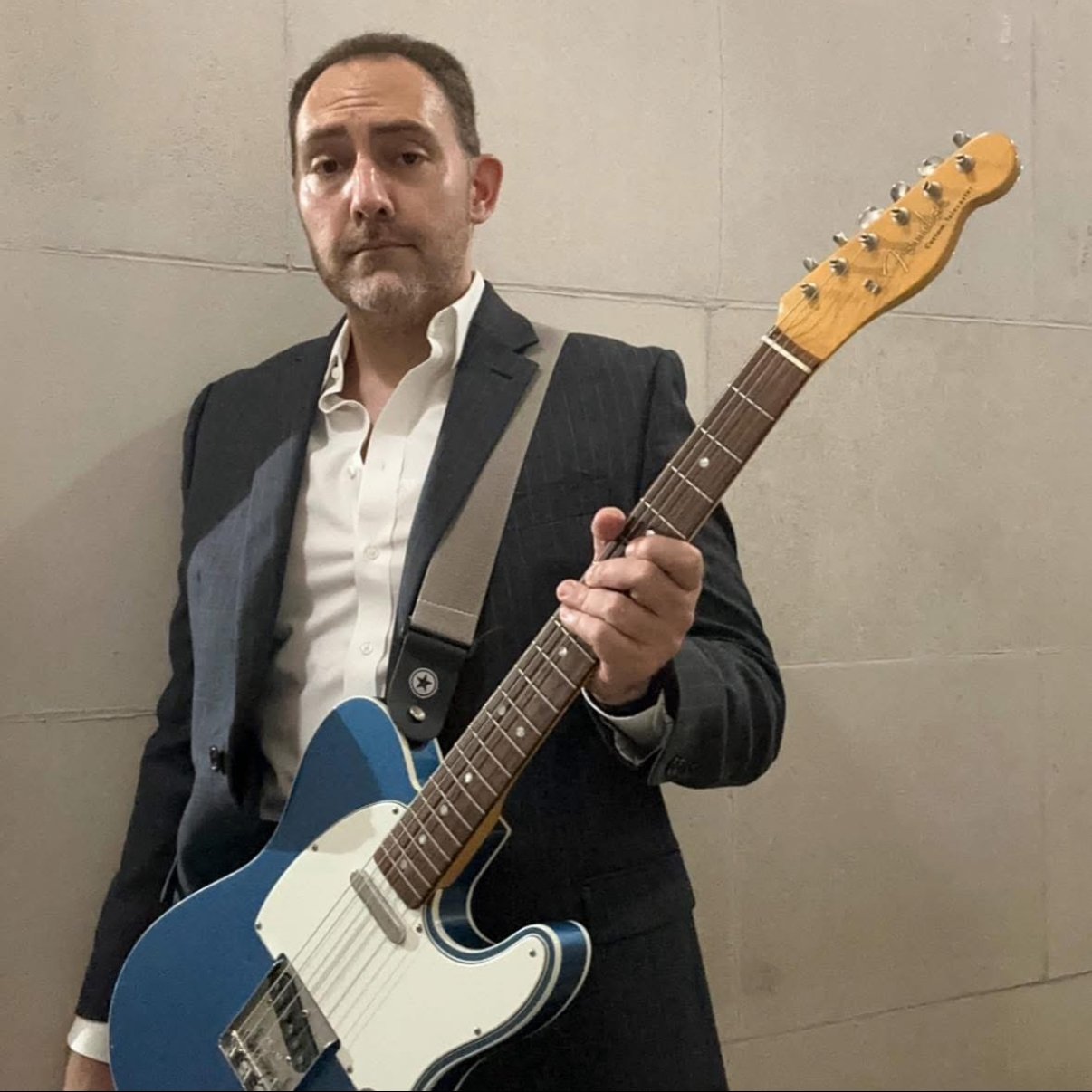
Hi! Jonathan, welcome to the show! Let’s just dive right in—your latest EP is called This Land: Songs for the Usa. When did the seed for this whole project first get planted in your head?
A: The idea came to me in early 2026 when I realized that the 250th anniversary of the United States was coming up later in the year at a time when so many people, including myself, feel the country has strayed from its most basic ideals. I wanted to do something to lend my voice to celebrating those ideals while also pointing out how the United States has fallen short of them, particularly in recent years. Originally I only intended to release a cover on “This Land is Your Land” by Woody Guthrie on July 4, which I think is the greatest song about America ever written. Then one day in May “Fortunate Son” came up on shuffle and I realized I wanted to do more.
You kick things off with a classic take on ‘Fortunate Son’. What is it about that specific track that made you feel like it needed to be part of your story on this EP?
A: “Fortunate Son” is one of the most powerful rock songs ever written. It is more relevant today than ever, as the rich get richer while everyone else struggles and people serving in the military are put in harm’s way based on the whims of the wealthy and powerful. I can think of no better opening track for a project like this. It set the tone for everything I was hoping to say with this project. Musically, I’m a guitarist first and foremost, and having a chance to record one of greatest riffs of all-time was a lot of fun and a powerful way to start the EP.
Moving into ‘American Dream’, that phrase means something different to pretty much everyone you talk to. What does the title phrase actually represent to you these days?
A: To me, it represents the notion that anyone in the United States who works hard and has a little determination can build a happy and prosperous life for themselves and their family. That is a nice idea, and certainly an inspirational one, but it has never really been true for so many people. Women, minorities, and those from disadvantaged economic backgrounds have always faced additional obstacles to achieving that dream. Also, after decades of progress toward removing those obstacles, the country has been heading in the wrong direction in recent years. I wrote “American Dream” from the perspective of someone who believed in that dream growing up, only to see it crumble under the weight of reality as the years go by.
I love how the tracklist flows into ‘The Way It Is / Changes’. Medleys or mashups of classic themes can be tricky—how did you approach blending those musical worlds together without losing the core emotional weight?
A: I started off with a “full band” arrangement, and it just wasn’t coming together. When I tried it with just an acoustic guitar it came together nicely. I would never presume to try to play piano like Bruce Hornsby or rap like Tupac, because that would be far beyond my abilities, so I tried to bring it all together in a way that was my own. I also think doing it with just acoustic guitar let the power of the message of the two songs take the spotlight. Doing the bridge of “Changes” as spoken word over the acoustic guitar allowed me to convey the power of Tupac’s words in a way that better fit my abilities.
When you get to ‘Land of Hope and Dreams’, there’s such a sweeping, cinematic feel to it. Where were you mentally when you were putting the final touches on that arrangement?
A: Bruce Springsteen is my favorite artist of all-time, and I wanted to do justice to his original version of this song without it being a one-to-one rendition. I also knew this was the song on the EP which would most embody the aspirational aspects of American ideals, and I wanted an uplifting arrangement to give the track that sense of hope. After the stripped-down sound of “The Way It Is/Changes,” I wanted “Land of Hope and Dreams” to sound grander and convey a feeling that, despite the many failures of the past, that hope is still real.
Looking at the EP as a whole, you’re covering some heavy thematic ground about place, identity, and the country. Do you find that writing songs like these brings you a sense of clarity, or does it just raise more questions?
A: I think it does bring a sense of clarity. So often it seems thoughts and feelings can be rather abstract until something distills them into a more concrete form. Writing “American Dream,” for example, really brought into focus a vague feeling I’ve had for a long time about how the promise of the American Dream I felt when I was young turned out to be more of an illusion than something that was actually attainable for most people. Turning that notion into a story of two people whose youthful dream couldn’t survive modern reality really brought clarity to that feeling for me. I think that is what the best music does across a variety of topics and feelings, and I did my best to accomplish it here.
Let’s talk about the actual studio setup for a minute. When you were recording these tracks, did you want a raw, live-in-the-room feel, or were you meticulously layering things track by track?
A: it was a mix of both. There was a time element with this project, because it had to come out on July 4, 2026, and I didn’t have any idea I’d be doing an EP as opposed to a single until mid-May. That brought a legitimate sense of urgency and the live feel that comes from doing things quickly and relying more on emotion than perfection. There was a more meticulous approach for “Land of Hope and Dreams” because I was layering different sonic elements to give it a more cinematic character. I think the respective approaches served the individual songs well.
When you’re interpreting songs or writing around these heavy Americana motifs, how do you keep your own distinct voice front and center instead of getting lost in the history of the tracks?
A: I feel every artist is a combination of their influences and their own voice. The inclusion of “American Dream” really made this project feel like my own. I feel it conveyed a message that was uniquely mine that also fit in well with my interpretations of the classic songs. Also, bringing my own abilities to the mix gives a different tone and perspective to an existing song. For example, my performance of the bridge from “Changes” obviously hits different than Tupac’s original, but my hope is that lending my voice to the same words only underscores how powerful and timeless they are.
If someone is sitting in their car, throwing this EP on for a late-night drive, what’s the one mood or feeling you hope hits them right as the final track wraps up?
A: I hope it is a mood of reflection. So often songs about the United States are purely patriotic to the point they can be jingoistic. The best songs, such as “Born in the USA” and “Rockin’ in the Free World,” are powerful and cause the engaged listener to think. I hope someone who listens to “This Land” from start to finish on a starlit drive feels reflective about the current state of the USA, how it is falling short of its own ideals, and how its people can collectively go about fixing that.
You’ve spent plenty of time putting out deep, reflective work. Do you feel like This Land is a continuation of everything you’ve built so far, or does it feel like a sharp left turn?
A: It does feel like a continuation of my work in the past, but more focused on the political side of my work than any other project was previously. I’ve recorded political songs before. For example, “People Are the Problem” from my most recent album, “Lifetime on I-79,” was written on election night in 2024 as my reaction to the events of that day. Also, I released a cover of Don Henley’s classic “The End of the Innocence” on the following Inauguration Day. “This Land” builds on those themes and is the political side of my music in its purest form. There are certainly other aspects to my music, but this is a natural progression of the political element.
When you look back at the process of putting this EP together from start to finish, what’s the funniest or most unexpected moment that happened behind the scenes?
A: I recorded the guitar tracks for “American Dream” through a BOSS GX-1 multi-effects unit. I won’t bore you with all the technical details, but some of the physical controls have different functions depending on the given setting. It wasn’t until I recorded the main rhythm guitar from start to finish that I realized I had accidentally activated the pitch-shifting function when I went from one setting to another and recorded the entire take in a higher key than I intended. I thought it actually sounded better that way, so I ran with it. But it was entirely an accident.
To wrap things up here as we look ahead—what does the rest of the year look like for you? Are we going to see you taking these songs out on the road, or are you already locking yourself back in the studio?
A: I was actually in the middle of recording a full-length album when I got the idea to record this EP, so I went back to work on that as soon as “This Land” was finished. I do play some of the “This Land” songs solo acoustic at local venues, which is fun and serves the songs well. I also just finished a holiday EP that I really enjoyed recording. But now I’m back to work on my main project, which I’m hoping to release in spring or summer of 2027. It’s an 80s inspired album with a lot of synth sounds, which is new for me. I’m really enjoying it and I’m excited to share it with the world.