Lucy Fitzgerald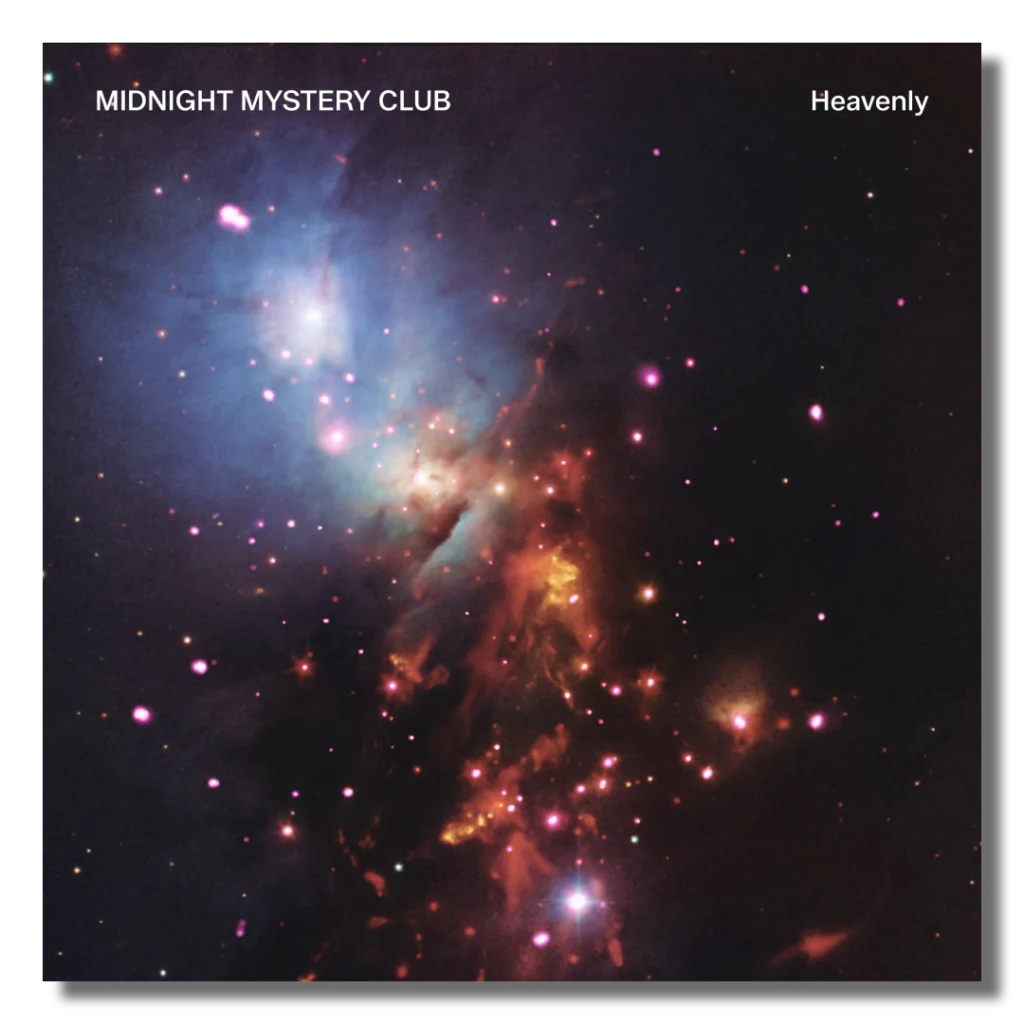
Q: Hi! So walk me through it — where were you guys when “Blow My Mind” actually came together? Was it a late-night studio thing or did it start somewhere totally random?
David: I was living in a tiny studio apartment in San Luis Obispo across from Lincoln Street Deli. I set up my equipment and quickly realized it took up most of the space, which turned out to be a great reminder that whenever I was home, I should be working on something. “Blow My Mind” started to take shape on a Saturday, inspired by a recent first date and the sounds I had been dreaming about over the last few years since our previous full-length. I wanted the song structures to capture that feeling of gazing out at space, when you look at the stars on a dark night without any city light interfering, it feels dense and thick, but then you realize there are millions of light-years between each star. I wanted to see if I could get that sonically, this dichotomy of feeling both spacious and saturated, a denseness that exists within a void. “Blow My Mind” became an anchor for this sound we wanted to chase. Most of the vocals were recorded that day in my little apartment. Once the structure was there, I flew out to Llavar in Atlanta, and we headed up to Chase Park Transduction Studios in Athens. Our friend and studio engineer Brian Dane Hansen had a connection there, so he set it up and that’s where we finished the record.
Llavar: By the time we got there, I was figuring out what it needed rhythmically and how I wanted it to feel. Because we were trying to fuse acoustic drums into this electronic world, we spent a lot of time on things that probably sound boring to anybody who isn’t a drummer: tuning the kit, swapping snares, getting the kick to sit right. Once we had everything where we wanted it, though, I could just play. That studio also has this amazing old Neve console, so it wasn’t only about recording live drums. We were running a lot of the electronic elements back through the analog gear too. That was important because the song already had this dreamy quality, and we wanted to give it a little dirt, warmth and humanity without losing what made the original idea special. So I always say we were basically putting on wax what David originally put on paper.
Q: David, you write everything solo before it gets into the studio with Llavar — what does “Blow My Mind” look like at the very first draft stage, before the production and the drums come in?
David: I usually use placeholders for things I know we’ll need to add later. As our process has evolved, a demo is really just the sketch, a drum machine temporarily standing in for the real thing. It’s important that the rhythm is somewhat established because it’s going to affect how the vocal sits and the emphasis on the words. So even if it’s just a sample I use throughout the track, it starts to set an expectation of the feel, but not set in stone. I’m mostly focused on the song’s progression, lyrics, and synth structure, and leave those placeholders simplified so Llavar has the freedom to bring anything he wants to the track. When I’m writing, I’m typically sending him mixdowns daily so he can already be throwing out ideas, and we can discuss the overall direction. I’d say 90% of the synths, bass, and vocals for “Blow My Mind” were complete by the time we made it to Chase Park.
Q: Llavar, as the drummer bringing live percussion into all this electronic stuff — what was your first reaction hearing the initial sketch of this track?
Llavar: David brought in the core of the song, so the bones were already there, and he leaves a lot of room. My first reaction was that it already had a really strong sense of movement without trying too hard. It felt dreamy and almost weightless in places, but underneath all of that there was still a pulse. As a drummer, that immediately gives me something to grab onto. The temptation when you hear a track with a lot of space is to think, “Okay, let me fill this up.” I actually heard the opposite. I didn’t think it needed a drummer coming in and announcing, “Hey, there are live drums on this record now.” The drums needed to live inside the song rather than sit on top of it. We layer the live kit with electronic percussion and samples, so you’re not necessarily supposed to know where the electronic drums stop and where I start. That’s the point. We want that human push and pull, but we also love the weight and consistency you can get from electronic production.
So on “Blow My Mind,” I was thinking about dynamics and space. Where does the kick need to land? When should I completely stay out of the way? Sometimes the most musical decision you can make as a drummer is not playing something. The goal was to give the track some humanity and help it breathe without disturbing that dreamlike thing it already had going on.
Q: This is single number five off Telescope, and each one’s been tied to this idea of looking at things from a distance to finally understand them. Where does “Blow My Mind” fit into that emotional arc for you?
David: Telescope was conceptual before we even started. I had this idea of zooming in on one subject and looking at it closely. The title track was actually the first song I wrote, about a year before we started recording, and it just set the theme for the album from the start. I had no idea that throughout the process, I would go through every high and low of a relationship. It sort of enlarged the scope, and “Blow My Mind” began that progression. Those initial feelings that overflow all at once.
Llavar: To me, “Blow My Mind” feels like the point where distance stops being purely reflective and becomes emotional again. Sometimes you have to get far enough away from a relationship, a moment or even a version of yourself before you can really understand what it was. When you’re right in the middle of something, everything feels enormous. Time gives you the ability to look at it from another angle. But the interesting thing about “Blow My Mind” is that gaining perspective doesn’t necessarily mean losing the feeling. You can completely understand why something happened, accept that it is in the past and think you have made peace with it, and then one memory, one person or one moment can still hit you exactly the same way. That’s where I think this song sits in the album.
Q: You’ve got this whole visual thread running through the campaign with actual Hubble telescope imagery on the artwork — whose idea was that, and how early did that concept show up in the process?
David: At the time I was working on these songs, I was obsessing about outer space. Not in a sci-fi way, but more of a feeling that happens when you gaze out and focus on who we are, where we are in relation to all of creation; you start to have really trippy thoughts. That kind of feeling, like, why am I me, and how is it that I’m here right now and not someone else. It gives you a sense of how small and short your life is, and I think that’s a healthy thing to occasionally be reminded of. It just seemed fitting to feature these beautifully captured images, and we chose each one based on how it made us feel in relation to the song.
Llavar: The visual ideas grew alongside the making of Telescope. Once we started talking about distance, perspective, and looking at something that feels impossibly far away but is still completely visible to you, the connection to space and the telescope imagery felt pretty natural. We also didn’t want the title to just be a cool word on an album cover. If we’re going to call the record Telescope, then let’s actually build a world around that idea. David is really good at seeing the bigger concept behind the music. Sometimes we’ll get into these philosophical conversations about what he’s feeling or what a song represents, and he’ll say something that actually blows my mind, no pun intended. Once we had the concept, we leaned on Kristina Vilyams, who developed the artwork and design, and used actual imagery to really bring that world to life visually.
Q: You’ve been doing this together since 2016, splitting time between the Central Coast and the whole Ibiza/Balearic scene — does that push-pull between two totally different sonic worlds still show up in a song like “Blow My Mind”?
Llavar: Absolutely, and I actually think that contrast is a big part of why Midnight Mystery Club sounds the way it does. The Central Coast has this openness to it. There is a lot of space, coastline, long drives, sunsets, beautiful hillsides, boutique wineries, that kind of thing, and I think that naturally finds its way into David’s writing. Then you have this Balearic influence where music can still be emotional and beautiful, but it also has movement. It might be something you hear overlooking the water at sunset, but there is still a groove underneath it. That balance is really interesting to me as a drummer because I come from a background where feel and groove are everything. I don’t necessarily want to make something that is atmospheric just for the sake of being atmospheric. I still want your head to move. “Blow My Mind” sits right in the middle of those worlds. You can put headphones on, listen to all the little textures and get lost in it by yourself, but it also has enough rhythm underneath it that I can imagine hearing it late at night somewhere near the water. David: Llavar captures that better than I would. I’d just say the Balearic scene is just something we fell into. We weren’t ever trying to make music that fit within that world; it just happened. I love it because the fans of those genres have a real appreciation for music, with broad taste and an openness to give anything a listen. It’s an anything-is-welcome mentality as long as it feels authentic. But when you sit down to write an album, you really never know. I just try to focus on making music that is inspiring to me and hope there are enough people out there with similar tastes who connect with it.
Q: David, going from being an audio engineer in Nashville to co-writing house records to this — how much of that earlier chapter still creeps into how you build a track today?
David: Working in Nashville was like music industry boot camp. I think it’s informed a lot of the decisions we make, mostly to just focus on making music that we like and not compromise for the hope of success. What was amazing to me about Nashville is that you could go to a writers’ night any day of the week and hear some of the most talented singers and musicians you’ll ever come across. They’re out there grinding every day and yet remain undiscovered, and meanwhile, you see so many “successful” acts that struggle. I had an up-close view of what it’s like to write a successful song you’re then married to for the rest of your life, and if you hate it you still have to perform it six thousand times because it pays the bills. That was my personal nightmare, and I decided early on to avoid it.
The engineering side was less important than you might expect. My job title was audio engineer, but I wore the hats of building stages, running lights, helping video world, and sometimes the occasional security guard. It was that immersion in every aspect of live performance that really educated me on what it means to be a professional musician and performer.
Q: Llavar, you spent years touring behind William Bell before this project — does that soul and R&B background ever quietly sneak into how you approach the drums on something as dreamy as “Blow My Mind”?
Llavar: Definitely. Probably more than I consciously realize. Playing with somebody like William Bell reinforces something that every good soul drummer eventually learns, which is that feel matters a lot more than how many notes you can play. You can play something extremely simple and completely change the emotional weight of a song just by where you put the beat, how hard you hit it and how you interact with the vocal. There is a restraint to great soul music that I have always loved. The drums don’t have to constantly remind you that they’re there. They’re supporting the singer. They’re supporting the story. They’re creating a pocket that everybody else can live inside. I bring that same mentality into Midnight Mystery Club even though sonically it is obviously a very different world. I’m still thinking about the pocket. I’m still listening to the vocals. I’m still asking whether a fill actually helps the song or whether I’m just playing a fill because there’s an empty space. The electronic side adds another dimension because sometimes I’m also playing around programmed drums. So now it’s about finding where the human drummer fits with something that’s mathematically perfect. I don’t necessarily want to copy what the machine is doing. I want to complement it and introduce just enough imperfection that the whole thing starts breathing. That soul influence probably isn’t something where somebody hears “Blow My Mind” and immediately says, “Oh, that’s an R&B, funk drummer.” But it’s underneath everything I play. It’s the feel, the discipline and knowing when not to play. And honestly, I think that is one of the things that helps keep our electronic music from feeling too clinical.
Q: Deep house, indie dance, dream pop — you two never seem to stay in one lane for very long. Was there a version of “Blow My Mind” that sounded totally different before it landed where it did?
Llavar: We don’t really walk into a song saying, “Okay, this needs to be a deep house record” or “this one needs to be dream pop.” We listen for what the song wants, and across Telescope that meant songs pulling in pretty different directions. Some of them could have been pushed harder and made much more club-oriented. Others could have been stripped back even further. Every time we started adding things, the question became, does this actually make the song better or are we just adding production because we can? There are already a lot of little things happening on this record. Synth layers, vocals sitting in reverb, live and electronic percussion interacting with each other. If everything is fighting to be the star, you lose that feeling of floating through a song. The versions that ultimately won were the ones that gave everything some room. There’s plenty happening if you listen closely, but nothing is screaming for attention. That’s probably why we may fall into a few different genre descriptions depending on who is listening. David: Very true, but “Blow My Mind” really didn’t change much from conception to the final version. On other tracks there were times when I had to go back and redo parts because the rhythm changed or the song evolved during production, but this one arrived pretty much intact. We try to put so much of what we are feeling into our music. You don’t always feel like dancing, and so I need songs for those moments in my life. I feel like it’s my duty as an artist to never stop exploring, though I would say it’s less like starting at point A and ending up at Z, it’s more like a road trip where you photograph each stop along the way. Like a musical photo album made up of every moment that meant something. I want to look back at our body of work and feel like we kept growing and learning and discovering how to capture something reminiscent of what made us fall in love with music. There are boundaries on what MMC is, but within those boundaries, there’s lots of space to explore, and we haven’t reached the end of it yet.
Q: When you’re building something this atmospheric, how do you know when a song is actually finished versus just endlessly tweakable?
Llavar: That’s probably one of the hardest things about making music now because technically nothing ever has to be finished. I’m super critical of my own playing. I’ll listen to a mix or even a master and call David like, “Man, I should’ve done this there,” or “I would’ve changed that hi-hat pattern.” I constantly nitpick things. Honestly, I annoy myself by doing that. The reality is you can open the session six months later and find another plugin, change another synth or move something half a decibel. At some point I have to start asking a different question. Instead of “Can I make another change?” it becomes “Does this change actually make me feel anything more than I already felt?” Because you can absolutely produce the soul out of a record. Especially with something atmospheric like this, there is always room for another synth, another texture, another little piece of ear candy. We love that stuff, so we’re probably more guilty of it than most people. But eventually adding things starts making the song smaller instead of bigger because there isn’t any room left for the listener. A big lesson for me has been learning to leave some air in the record. Sometimes the thing giving a synth its personality is the empty space around it. So I think a song is finished when everything that’s there has a reason to be there and you stop hearing problems that actually matter. There is always going to be something you would change. At some point you have to recognize when you’re no longer improving the song and you’re just having trouble letting it go. Then you bounce it, send it off and try very hard not to reopen the session. David: Right, you’ve got to have that personal conviction. It’s one of the things that time has certainly helped. When I was younger there was a tendency to just keep adding. I don’t think that’s limited to musicians; it’s the same struggle for painters and anyone working in other mediums. As I’ve gotten older, I find it’s easier to recognize that moment when things feel like they’ve come together and it feels complete. I still need a sounding board, and that’s where Llavar is a great partner. If we’re both in agreement that it feels done, there’s more confidence in calling it finished. At the mastering stage, I rely heavily on our mastering engineer, Mike Nikou, who is the final stage of quality control. He hears the finished track with fresh ears, which provides that last layer of feedback on whether we hit the mark sonically.
Q: Last one — Telescope just came out July 10th, so what’s next for you guys for the rest of the year? Touring, more visuals, anything you can tease? Llavar: I think the biggest thing for us is that we don’t want the release to feel like the end of Telescope. We spent a long time building this record and building the visual world around it, so there are still a lot of ways we want people to experience it beyond putting the album online and moving to the next thing. The live side is a big part of that conversation. That’s actually one reason we’ve always been so intentional about putting real drums and real instrumentation into these records. Midnight Mystery Club was never designed to just become two guys standing behind laptops. The goal has always been figuring out how to take this music onto a stage and keep the character of the records while still letting the songs breathe and change in a live environment. For me, that’s probably one of the things I’m most excited about because there is a completely different energy when I get to play these songs rather than just hear the finished production.
There is also more visual storytelling we want to explore around Telescope. And then there are remixes, which David can speak to better than I can. That’s exciting because you spend so long hearing a song one way that it’s almost refreshing to hand it to somebody else and say, “Okay, what do you hear?” So I think the rest of the year is really about letting Telescope keep expanding. Live music, visuals, collaborations, remixes and then, naturally, figuring out what the next chapter sounds like. We’re just getting started with this one.
David: Llavar’s right, and the remix side is the thing I can actually tease. When we were finishing up Telescope, we already had this idea of wanting to bring a lot of the artists who inspire us into the mix. We’ve partnered with a handful of amazing people who will all be bringing a fresh remix to the tracks from Telescope for a reimagined compilation we’re releasing early next year. I’m super excited about the first single off this compilation from Joe Morris. I’ve been enamored with his work in underground Balearic music for years. Joe brought a completely new take on our track “Night Vision”, and that single will be out September 18th.

Listening to songs so you don’t have to! Just kidding :D, you totally should. Music blogger by day, nurse by night