Lucy Fitzgerald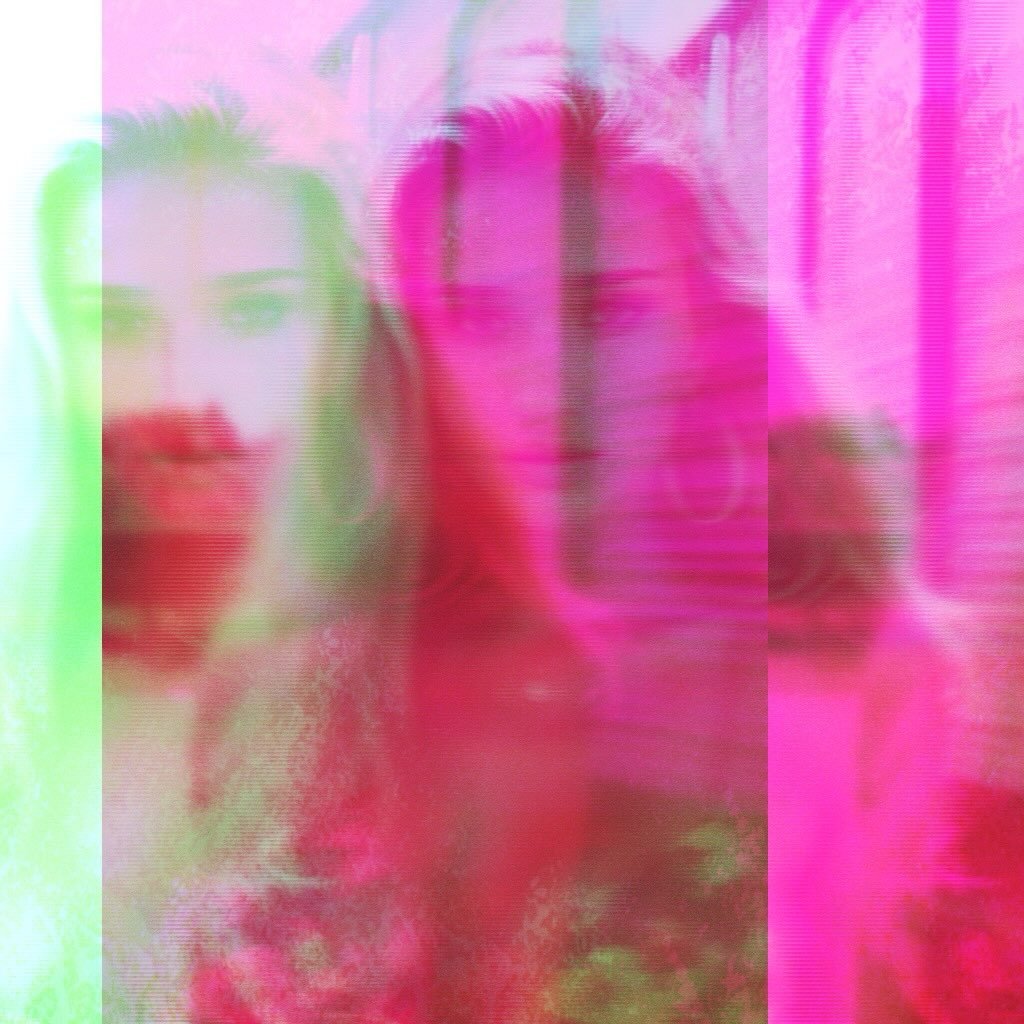
Q: So Flowers for Juno — where does that name even come from? There’s something almost
contradictory about it, flowers for a Roman goddess. Was that intentional?
A: My mother died around the time the band formed, and Juno is the mother goddess, so it’s essentially
a tribute to her. I also liked that it sounded like the name of an obscure early 2000s emo band you’d find
on a Victory Records sampler CD or something. And then there’s Flowers for Algernon, one of my
favourite books…in general I wanted a name that was of a more romantic or evocative nature, in contrast
to the generic, vague abstract one word band names that seem to be so prevalent right now.
Q: You’ve described your sound as gothic rock but there’s so much more going on — shoegaze,
darkwave, even something almost cinematic at times. Do you ever feel boxed in by genre labels, or do
you just lean into the chaos?
A: Not at all, if anything I try to move away from them more and more with each release. I have no
problem being associated with a particular genre, but it rarely captures what FFJ actually sound like. My
music is typically more primal and extrospective than what would normally be considered shoegaze or
darkwave.
Q: You brought in a Northumbrian harp on Lipstick and Furs — not exactly the most obvious instrument
for a gothic rock single. How did that come about, and how do you even find someone who plays
Northumbrian harp?
A: Northumberland has one of the biggest folk scenes in the country. It’s such a great instrument, if I write
a part that might normally go to an acoustic guitar or piano I just hand it over to Freja. I don’t care to be
restricted to typical ‘rock’ instrumentation, which is why there’s harps, harpsichords, sitars, and all
manner of electronic elements all over my tracks.
Q: The lyrics on your releases feel very lived-in and personal. How do you decide what’s fair game to
write about and what stays private?
A: I don’t really think too much about my lyrics; I tend to write very rapidly, if not improvise lyrics on the
spot…or even forgo lyrics entirely, a la Cocteau Twins and Dead Can Dance (both influences of mine).
Q: You’ve got a mellotron, electric sitar, fuzz bass synthesiser — you’re clearly not someone who keeps it
simple in the studio. Do you play everything yourself out of necessity or is that a deliberate artistic
choice?
A: Bit of both…to be blunt I can’t really trust other musicians with my musical ideas so I choose to do
everything myself. Most other musicians want to do strictly ‘rock’ or ‘metal’ or ‘electronic music’ so it’s
hard to find someone with a similar musicial perspective to my own.
Q: Bacchanalia Coppélia is such a wild title for an EP — it’s like a debauched ballet. What were you
going for with that project, and how does Lipstick and Furs feel different to you compared to what came
before?
A: My life at the time was a ‘debauched ballet’ of sorts…I certainly did a lot of drinking and dancing. At the
time I had no clue what I was doing, but having listened to the EP again recently there’s a kind of
disjointed narrative that only really makes sense after you’ve listened to the whole things a couple of
times over. I somehow mixed synthpop, shoegaze, doom metal, dance music, and even classical over
four tracks. Whether that actually works or not is up to the listener.
“Lipstick and Furs” is probably the most mellow single I’ve released so far, and it definitely leans a lot on
“October Rust” era Type O Negative, albeit with an emphasis on the shoegaze and new wave elements
already present on that record.
Q: The cover art and the model credit feel very considered — like the visual side of FFJ is just as
intentional as the music. How do you approach building that world around the releases?
A: It’s a reflection of my aesthetic tastes…attractive women as seen through a surreal, neo-psychedelic
lens. I don’t care for artwork that isn’t aesthetically pleasing; it should be an extension or representation
of the music therein.
Q: Gothic rock has such a rich lineage — The Cure, Bauhaus, Siouxsie — but your stuff doesn’t sound
like a nostalgia act at all. Who or what is actually influencing you right now, in this moment?
A: Basshunter, Seal, Sugababes, Akon, 80s era RHCP.
Q: You seem to operate pretty independently — producing, engineering, mixing, mastering all yourself.
Has there ever been a moment where you thought about bringing someone else in to take the reins a bit,
or is that control important to what FFJ is?
A: It’s not so much about control, but the lack thereof…Flowers for Juno are inherently chaotic.
Q: “Physical Culture” came out in late 2023, and you’ve been building this thing pretty steadily since.
What’s the gap between how FFJ is perceived from the outside and what it actually feels like on the
inside?
A: We’re routinely underestimated but seem to get exponentially bigger whilst other artists stagnate.
Q: So looking at the rest of 2026 — what’s the plan? Are we getting more singles, an album, are you
thinking about playing live at all? What does the next chapter of Flowers for Juno actually look like?
A: There is no plan. So long as I enjoy making music there’ll probably be more releases, but who knows
what tomorrow might bring…

Listening to songs so you don’t have to! Just kidding :D, you totally should. Music blogger by day, nurse by night